
What to do about tooth sensitivity
That jolt from something cold has a specific cause, and it is rarely the same one for everyone. Knowing which is yours changes the treatment.
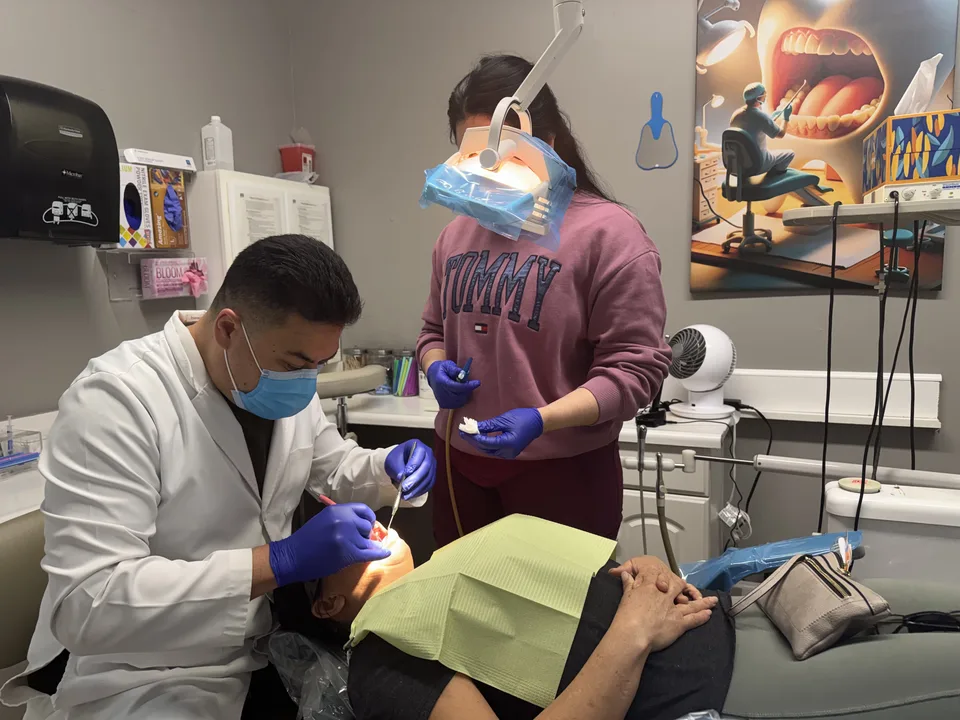
What is happening inside the tooth
A tooth has three layers. On the outside, enamel, which has no nerve endings. Under it, dentin, threaded with thousands of microscopic tubes that connect toward the nerve. And at the center, the pulp, where the nerve and blood vessels live.
While enamel covers the dentin, you feel nothing. When dentin is exposed, those tubes carry temperature changes straight toward the nerve. That is sensitivity.
Why dentin gets exposed
These are the usual causes, and the treatment depends on which one is yours:
- Gum recession, which exposes the root — with no enamel to protect it
- Brushing too hard or with stiff bristles, which wears enamel and pushes the gum back
- Grinding or clenching, usually while asleep
- Acid erosion: soda, citrus, reflux
- Decay
- An old filling that has started to leak at the edges
- Recent whitening, which causes temporary sensitivity that passes
What you can do while you wait for an appointment
None of this fixes the cause, but it usually eases the symptom and does no harm:
- Switch to a soft-bristled brush
- Brush without pressing: the motion matters more than the force
- Use a toothpaste for sensitive teeth, and give it a couple of weeks to work
- Wait twenty or thirty minutes before brushing after something acidic
- Do not put aspirin or any painkiller directly on the gum: it burns the tissue
The difference that matters
There is one distinction worth knowing, because it changes how urgent this is.
If the discomfort comes with cold and disappears the moment you remove it, that fits sensitivity. If the pain lingers — thirty seconds, a minute, or it wakes you at night — that points to an inflamed nerve, and at that point it is no longer sensitivity but something that needs attention soon.
The same goes if heat rather than cold sets it off, or if it comes with a swollen gum.
What we do at the visit
First, pinpoint the exact tooth and find the cause: an exam, an X-ray where needed, and a check of the gums and any previous fillings.
From there the treatment changes completely. Recession is not treated like decay, and grinding wear is not treated like a leaking filling. That is why sensitive toothpaste helps but is not enough: it eases the symptom without touching the reason.
Related service: Tooth Pain & Sensitivity